
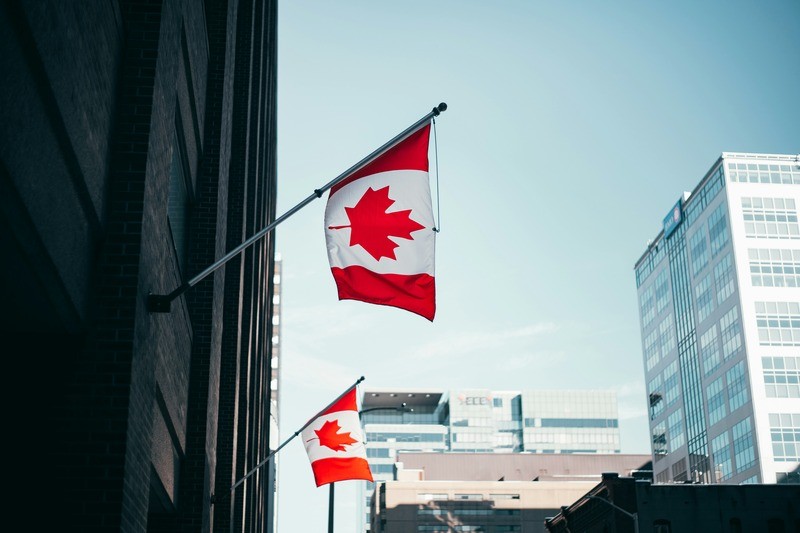
Canada ends second-generation citizenship cutoff, easing path for Indian-origin families
Ottawa: Canada approved major changes to its citizenship laws with the passage of Bill C-3, legislation designed to resolve long-standing gaps that prevented some Canadians from passing on citizenship to children born or adopted abroad.
Indian-origin families are among those expected to benefit from the new legislation, which lifts what critics have called the “second-generation cutoff”.
The bill, which received royal assent last week, will grant citizenship to people born before the law takes effect who would have qualified if not for earlier legislative rules or the first-generation limit on citizenship by descent.
The amendments will come into force on a date set by order in council.
Once implemented, Canadian parents who were themselves born or adopted outside the country will be able to transmit citizenship to children born or adopted abroad, provided they can show a substantial connection to Canada.
The federal government says the approach aims to balance fairness with the principle that citizenship by descent should reflect genuine ties to the country.
“Bill C-3 will fix long-standing issues in our citizenship laws and bring fairness to families with children born or adopted abroad,” Immigration Minister Lena Metlege Diab said in a statement.
“It will provide citizenship to people who were excluded by previous laws, and it will set clear rules for the future.”
The roots of the issue stretch back to the original 1947 Citizenship Act, which included provisions that caused some people to lose citizenship or never acquire it.
Amendments in 2009 and 2015 restored or granted citizenship to most of those affected, leading about 20,000 people to apply for proof of citizenship.
The 2009 changes also introduced the first-generation limit, which barred Canadian parents born abroad from automatically passing on citizenship to children born outside Canada.
In December 2023, the Ontario Superior Court ruled key parts of that law unconstitutional.
The federal government declined to appeal, saying the rules produced unreasonable outcomes for families.
Until the amendments are formally in force, an interim measure remains available for individuals affected by existing limitations.
IBNS
Senior Staff Reporter at Northeast Herald, covering news from Tripura and Northeast India.
Related Articles

US military breach? Chinese national faces charges after alleged base photography
The United States Department of Justice has filed a criminal complaint against Qilin Wu, a 35-year-old Chinese national, accusing him of unauthorised photography of a sensitive military installation in the state of Missouri, U.S. Attorney R. Matthew Price announced.

Pakistan: Afghan journalist detained in Islamabad, sparks fears of forced deportation
Pakistani police have detained an Afghan journalist in Islamabad, raising concerns over the safety of exiled reporters and the risk of possible forced deportation, according to media reports.

Dramatic scenes in London as protester climbs Iranian Embassy, rips down flag
A protester climbed onto the balcony of the Iranian Embassy in London as hundreds of demonstrators gathered outside, chanting anti-government slogans, media reports said.

Thousands protest ICE shooting in Minneapolis as leaders urge calm amid nationwide demonstrations
Thousands of people marched through Minneapolis on Saturday to protest the fatal shooting of a woman by a federal immigration officer and the shooting of two protesters in Portland, Oregon, as Minnesota leaders urged demonstrators to remain peaceful amid rising tensions.
Latest News

US military breach? Chinese national faces charges after alleged base photography

Pakistan: Afghan journalist detained in Islamabad, sparks fears of forced deportation

Multiple suspected Pakistani drones spotted near Jammu and Kashmir border, security forces on high alert

India is moving ahead with remarkable certainty amid global uncertainty: Modi at Vibrant Gujarat Regional Conference inauguration

