
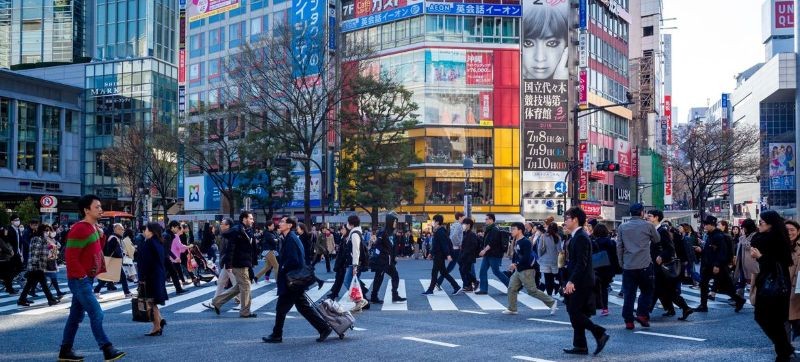
In 1950, the global population stood at 2.5 billion and just 20 per cent were city dwellers. By 2050, two-thirds of global growth is projected to occur in cities and the remainder in towns.
Furthermore, “megacities” – metropolitan areas with 10 million or more inhabitants – will continue to expand while rural areas will further decline, except in sub-Saharan Africa.
‘A defining force’
These are among the findings in the World Urbanization Prospects 2025: Summary of Results, published on Tuesday by the UN Department of Economic and Social Affairs (UNDESA).
It comes as countries negotiate climate action commitments at COP30 in Belém, Brazil, and underscores the pivotal role of urbanization in achieving sustainable development and climate resilience.
“Urbanization is a defining force of our time. When managed inclusively and strategically, it can unlock transformative pathways for climate action, economic growth, and social equity,” said Li Junhua, head of UNDESA.
“To achieve balanced territorial development, countries must adopt integrated national policies that align housing, land use, mobility, and public services across urban and rural areas.”
Megacities on the rise
The report documents a fourfold increase in the number of megacities since 1975, from eight to 33. Nineteen of them are in Asia.
Indonesia’s capital, Jakarta – home to nearly 42 million people – is the world’s most populous city, followed by Dhaka, Bangladesh, with almost 40 million residents, and Tokyo, Japan, with 33 million.
Egypt’s capital Cairo is the only city outside Asia to make the top 10.
The megacities list is expected to rise to 37 by 2050 as the populations of Addis Ababa (Ethiopia), Dar es Salaam (Tanzania), Hajipur (India), and Kuala Lumpur (Malaysia) are on track to surpass the 10 million mark.
Small but mighty
Across the world, more people live in small and medium-sized cities, which are growing at a faster pace than megacities – particularly in Africa and Asia.
The experts analysed some 12,000 cities. The majority, 96 per cent, have fewer than one million inhabitants, while 81 per cent have fewer than 250,000.
The total number of cities has more than doubled since 1975, and projections indicate it could exceed 15,000 by mid-century, with most cities having populations below 250,000.
Diverging growth patterns
Although many cities continue to expand, the report reveals that others are experiencing population decline.
“Some city populations are shrinking even as their countries’ populations grow, while others are growing despite the decline of the national population,” it said.
Most cities that are shrinking had fewer than 250,000 inhabitants in 2025. More than a third are in China and 17 per cent are in India.
However, Mexico City and Chengdu, China, are among very large cities that have also seen population decreases.
Towns and rural areas
Meanwhile, towns – defined as having at least 5,000 inhabitants – are the most common settlement type in more than 70 countries, a diverse group that includes Germany, India, Uganda, and the United States.
Rural areas remain the most common settlement type in 62 countries, compared to 116 in 1975, and this is expected to further decline to 44 by 2050.
Sub-Saharan Africa is the only region that continues to see growth in this regard, and it is expected to account for nearly all future rural population growth.