
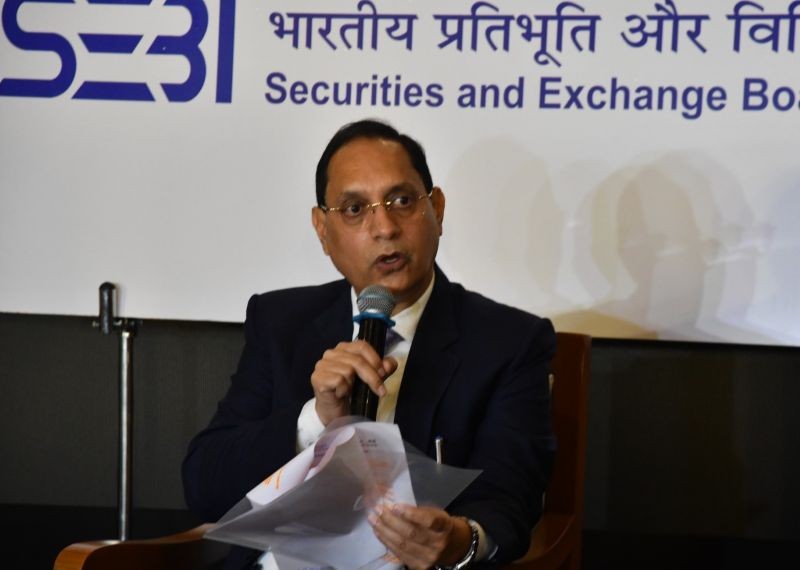
The SEBI chairman started by reflecting upon West Bengal’s recent growth potential and the increase in investor participation in the past decade, with over 7 times growth.
“West Bengal has been an important participant in India's economic and financial progress. The state's economy is estimated to have grown by 7.6% in FY26. Its participation in capital markets has also expanded considerably. The number of investors in the securities market from West Bengal has increased to over 90 lakh today from around 12 lakh in FY15. Around 36% of these are young investors below 30 years of age,” said Pandey.
He further spoke on the importance of capital markets for business in today’s financial atmosphere, saying, “Equity markets enable businesses to raise long-term risk capital without adding repayment obligations. Corporate bond markets provide alternative avenues for financing expansion.
“For businesses, therefore, capital markets are not merely platforms where securities are traded. They are avenues for financing growth, improving competitiveness and realising entrepreneurial ambitions. At the same time, they enable household savings to participate in the country's economic progress,” said Pandey.
On increasing investor awareness and financial literacy, Pandey said, “Regulation and technology alone cannot protect investors from every risk. An informed investor remains the first line of defence. During FY26, over 41,000 investor awareness programmes were conducted in collaboration with exchanges and depositories, reaching more than 22 lakh participants. Through Project Jagrook, SEBI, along with its partners, has launched a campaign for investor awareness on Oct 05, 2026 - 'Samajh Se Investing Simple'.”
The recent Jio Platforms IPO attracted 22.19 times overall subscription, but demand from retail investors was 2.72 times, compared with 70.55 times from qualified institutional buyers, excluding anchor investors.
Reflecting on how SEBI ensures that ordinary investors are not disadvantaged by the information, analytical resources or market access available to institutional investors, Pandey told IBNS, “SEBI has a very clear framework of rules where, unless you are applying under 62, which are loss-making companies, for others, 35% reservation is there for retail investors.
"The institutional investors are important; there are anchor investments, so everything is within that norm. India is one market where retail reservation is present. In many of the markets, at the IPO stage, retail investors are not even allowed.”
He spoke on SEBI Check, an investor-protection facility introduced by SEBI which helps investors verify whether the bank account or UPI ID they are transferring their investment money to belongs to a SEBI-registered intermediary or not.
“At SEBI, we have introduced several measures to make investing safer and strengthen investor confidence. Validated UPI handles and the SEBI Check facility help investors verify payment details of genuine registered intermediaries, reducing the risk of transferring funds to fraudsters.”
(Reported by Swastik Sarkar)