
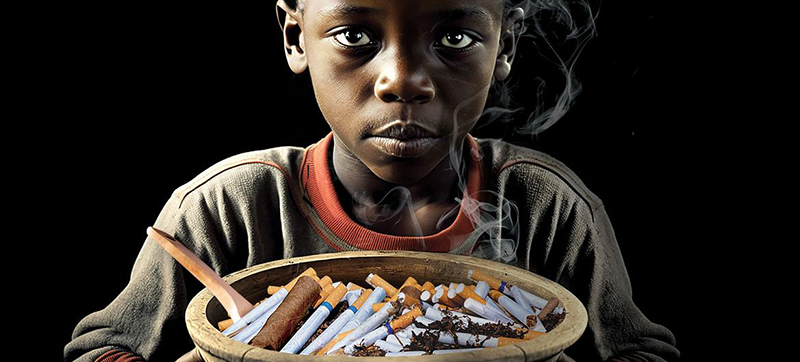
According to the UN health agency, the tobacco industry’s approach has resulted in increased use of e-cigarettes, with nine out of 10 smokers starting before the age of 18 - and some as early as 11.
“Considering that children spend nearly one-third of their waking hours in school, and much of the peer pressure they encounter occurs within these educational environments, schools play a pivotal role,” WHO said.
Schools are in “a uniquely powerful position to play a major role in reducing the serious problem of smoking and other tobacco and nicotine use by kids”.
The appeal of e-cigarettes
Although smoking has continued to decline among European teens, WHO reported that there has been a rise in novel and emerging tobacco and nicotine products – including electronic cigarettes.
The UN agency pointed out these products have been made more affordable for young people owing to the sale of single-use cigarettes and e-cigarettes, which also typically lack health warnings.
“If we don’t take urgent action now, we risk seeing the next generation of tobacco and nicotine users recruited through tobacco industries’ unethical practices,” said Dr Hans Henri Kluge, Regional Director for WHO European Region.
New guidance
The alert comes as the WHO released two new publications to coincide with the return to school of children in many countries of the global north: “Freedom from tobacco and nicotine: guide for schools,” and the “Nicotine and Tobacco-Free Schools Toolkit”.
The launch also coincided with a warning last month by regulators in the United States that companies must stop selling illegal e-cigarettes that appeal to youth by resembling school supplies, cartoon characters, and even teddy bears.
“Whether sitting in class, playing games outside or waiting at the school bus stop, we must protect young people from deadly second-hand smoke and toxic e-cigarette emissions as well as ads promoting these products,” said Dr Ruediger Krech, WHO Director of Health Promotion.
“It is deeply concerning that the tobacco industry is still targeting young people and makes vast profits, harming their health”, he continued.
Schools must be safe spaces for young people, where they are free from exposure to, or pressure to use nicotine products. Creating a smoke- and nicotine-free environment in school settings is fundamental to helping prevent young people from starting smoking”.
The WHO guides also highlight countries that have successfully implemented policies in support of tobacco and nicotine-free campuses. They include India, Indonesia, Ireland, Kyrgyzstan, Morocco, Qatar, Syria, Saudi Arabia and Ukraine.
‘Whole-of-school’ approach
WHO emphasized a “whole-of-school” approach to creating nicotine and tobacco-free campuses. Input is needed from teachers, staff, students and parents, WHO maintained.
The UN health agency’s documents include information on how to support students wanting to quit, education campaigns, implementing policies and how to enforce them.
Advice to educators and policymakers includes:
Banning nicotine and tobacco products on school campuses
Prohibiting the sale of products near schools
Banning direct and indirect ads and promotion of nicotine and tobacco products near classrooms
Refusing sponsorship or engagement with tobacco and nicotine industries, for instance for school projects.
Dangers of tobacco smoke
Speaking to journalists in Geneva, WHO medical officer Dr Kerstin Schotte warned that tobacco kills “eight million people every year, or one person every four seconds”.
Meanwhile, 1.3 million people who die from tobacco smoke don’t even use the product themselves but breathe in second-hand smoke.
Dr Schotte noted that “half of the world's children breathe tobacco polluted air and as a consequence, 51,000 children die every year due to exposure to tobacco smoke”.