
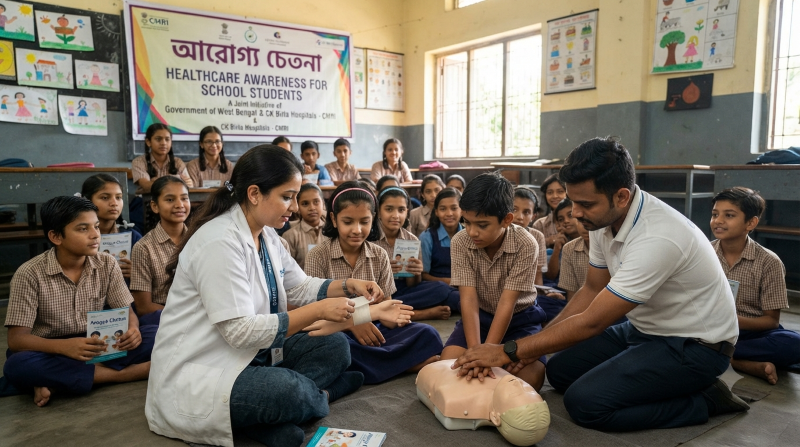
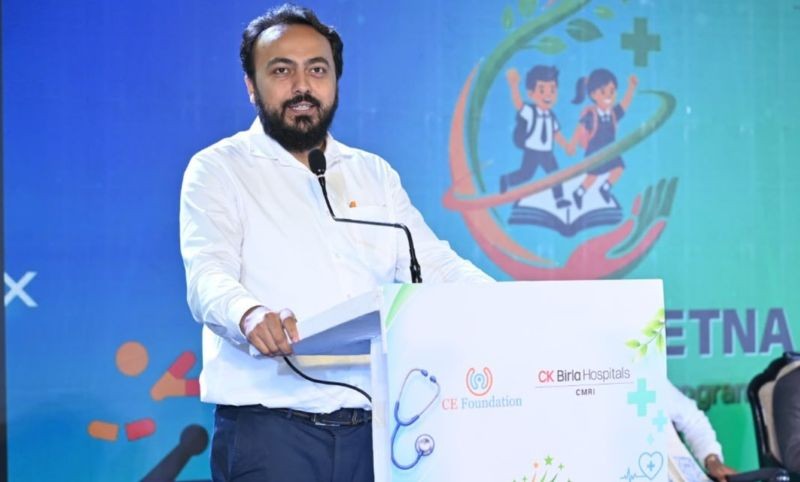
Dr. Khan attended the launch of 'Arogya Chetna', an initiative undertaken jointly by the West Bengal Government and CK Birla Hospitals-CMRI on Tuesday.
Health awareness beyond textbooks
Speaking at the launch, Dr. Khan, an oncologist, said, “School education should not be limited to bookish knowledge. Alongside regular academic subjects, children must also be taught essential life-saving skills.
“Basic knowledge of how to save lives is crucial, making health awareness programmes extremely important for students across government, government-aided and private schools. We need to integrate such learning into the school education system.”
Action plan to reach schools across Bengal
Highlighting the scale of the challenge, the Youth and Sports Minister said, “West Bengal has a population of around 10 crore, which makes this a challenging task. We must reach every corner of the state, as no locality is immune to diseases.
“While it is a massive undertaking, we need to draw up a comprehensive action plan to cover as many schools as possible over the next one year.”
For now, the initiative aims to cover government, government-aided and government-sponsored schools.
About Arogya Chetna
The initiative seeks to equip children with essential health knowledge, basic safety skills and an understanding of preventive healthcare practices from an early age.
Through structured awareness and training sessions, the programme will focus on empowering students to recognise potential health and safety concerns and respond to everyday situations with greater awareness and confidence.
Dr Sombrata Roy, Zonal Head of CK Birla Hospitals, said, “Healthcare awareness must begin early, and schools have an important role to play in shaping how children understand health, hygiene and personal safety. Through ‘Arogya Chetna’, we aim to take essential healthcare knowledge beyond hospital settings and into school communities, equipping students with practical skills such as basic first aid, awareness of personal boundaries and everyday safety measures.
"We believe that educating children at an early age can help them make informed decisions, respond better to emergencies and develop responsible health habits. Our collaboration with the Government of West Bengal reflects our commitment to making preventive healthcare education more accessible and inclusive. By ensuring that the programme is entirely free of cost, we hope to reach more students and contribute towards building a healthier, safer and more aware generation.”