
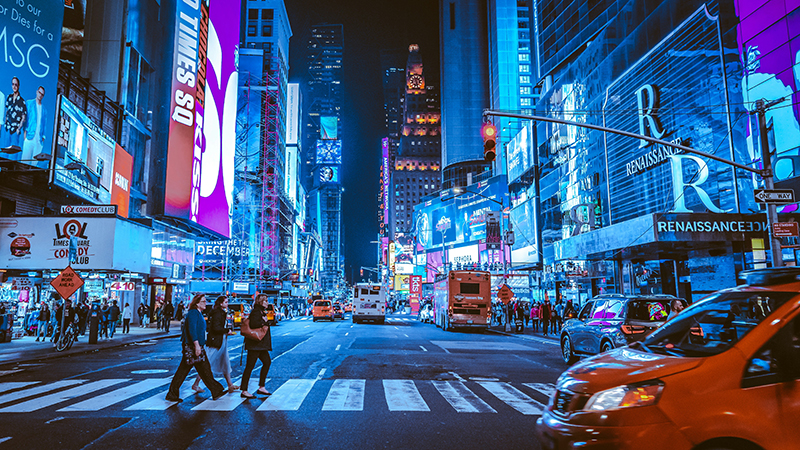
Bright, outdoor lights are used at night to enhance the visibility of the environment, improving human safety and comfort. However, the excessive use of artificial light has resulted in about 80% of the world's population living in light-polluted environments, according to the study’s authors.
While previous studies have linked increased exposure to bright, artificial light at night to the development of cardiovascular disease, this is one of the first studies to explore the relationship between exposure to light pollution at night and the potential risk to brain health and stroke.
“Despite significant advances in reducing traditional cardiovascular risk factors such as smoking, obesity and Type 2 diabetes, it is important to consider environmental factors in our efforts to decrease the global burden of cardiovascular disease,” said one of the corresponding authors Jian-Bing Wang, Ph.D., a researcher in the department of public health and department of endocrinology of the Children's Hospital, Zhejiang University School of Medicine and the National Clinical Research Center for Children’s Health in Hangzhou, China.
In a review of 28,302 adults living in China, exposure to residential outdoor nighttime light was assessed by satellite images that mapped light pollution. Cases of stroke were confirmed by hospital medical records and death certificates.
The analysis of data including six years of follow-up with participants found:
1,278 people developed cerebrovascular disease, including 777 ischemic (clot-caused) stroke cases and 133 hemorrhagic (bleeding) stroke cases.
People with the highest levels of exposure to outdoor light at night had a 43% increased risk of developing cerebrovascular disease compared to those with the lowest levels of exposure.
People with the highest levels of exposure to particulate matter 2.5 (PM2.5 is primarily emissions from combustion of gasoline, oil, diesel fuel or wood) had a 41% increased risk of developing cerebrovascular disease compared to participants with the lowest levels of exposure to PM2.5.
Participants with the highest levels of exposure to PM10 (PM10 is primarily from dust and smoke) had a 50% increased risk of developing cerebrovascular disease compared to those with the lowest exposure to PM10.
Participants with the highest exposure to nitrogen oxide (emissions from cars, trucks and buses, power plants and off-road equipment) had a 31% higher risk of developing cerebrovascular disease compared to those with the lowest exposure.
Of note, an additional analysis that included both outdoor light at night and pollution found that the associations with increased risk of cerebrovascular disease persisted, except for ischemic stroke.
“Our study suggests that higher levels of exposure to outdoor artificial light at night may be a risk factor for cerebrovascular disease,” Wang said. “Therefore, we advise people, especially those living in urban areas, to consider reducing that exposure to protect themselves from its potential harmful impact.”
Artificial sources of light include fluorescent, incandescent and LED light sources. Continuous exposure to these light sources at night can suppress melatonin production, a hormone that promotes sleep. This can disrupt the 24-hour internal clock in people and impair sleep. People with poor sleep, compared to good sleepers, are more likely to experience worse cardiovascular health over time, according to the study. The American Heart Association’s Life’s Essential 8 includes healthy sleep as one of the eight healthy lifestyle behaviors and health measures that drive optimal cardiovascular health.
“We need to develop more effective policies and prevention strategies to reduce the burden of disease from environmental factors such as light as well as air pollution, particularly for people living in the most densely populated, polluted areas around the world,” Wang said.