
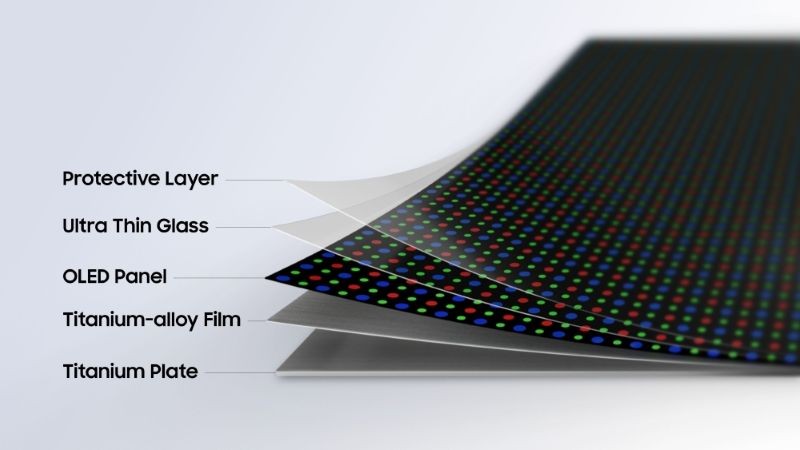
Built on seven generations of foldable innovation and engineering expertise, the redesigned display structure uses advanced materials and structural improvements to deliver a more refined viewing experience, enhanced durability and reduced crease visibility.
Drawing on Samsung's display expertise, Flex Titanium technology integrates two titanium-based components — a titanium-alloy film and a titanium plate — that work together to balance slimness, flexibility and strength within the foldable display structure.
“Samsung’s strength in the foldable category comes from connecting user needs with our technologies that deliver tangible benefits in everyday life,” said Sunghoon Moon, EVP and Senior Executive, Mobile R&D Office – H/W, Samsung Electronics.
“For the next generation of Galaxy foldables, Samsung is building on years of expertise to bring display innovations into devices that enhance user experiences, anchored by exceptional viewing experiences,” Moon added.
Building on years of foldable experience
Samsung has played a leading role in advancing mobile display innovation and bringing it to consumers at scale through mobile devices. This legacy includes the widespread adoption of AMOLED displays in 2007 and the evolution of displays into flexible form factors.
Across seven generations of Galaxy foldables, Samsung said it has closely studied consumer feedback, gaining a deeper understanding of what users expect from the category: a larger and more immersive viewing experience with a less visible crease, without compromising durability or portability.
To meet these expectations, the company rethought the construction of foldable displays by combining advances in technology, materials and mechanical engineering. The result is Flex Titanium technology, its latest milestone in foldable display innovation.
Flex Titanium: Next-level viewing
To create an immersive display capable of withstanding everyday use, Samsung adopted a new approach to structural design. The company needed a material strong enough to withstand external shocks, flexible enough to endure repeated folding and thin enough to fit within a refined device structure.
Samsung said titanium offered the right balance.
Known for its resilience and strength, titanium has been used in demanding applications, including satellite antennas and the wheels of a Mars rover. However, its stiffness also presents significant engineering challenges when incorporated into the thin and flexible structure of a foldable display.
Drawing on its engineering expertise, Samsung integrated titanium into two key components: a titanium-alloy film and a titanium plate.
The titanium-alloy film supports the display from within and sits below the OLED panel. Compared with polymer film, it offers 20 times greater mechanical stiffness. A precision rolling process makes the material exceptionally thin — roughly one-third the thickness of an average human hair — helping enable a slimmer display panel.
Below the film sits a robust titanium plate, a flexible structure that supports the display module from beneath. Advanced hole-processing technology eliminates air gaps between the module and the adhesive on the plate, allowing tighter bonding with the display module.
According to Samsung, the new structure provides more stable support beneath the display when unfolded while retaining the flexibility required to withstand repeated folding.
The display also integrates a high-resolution architecture and next-generation organic materials to deliver ultra-vivid resolution while reducing power consumption, significantly improving overall power efficiency.
“By introducing sophisticated micro-patterned holes to the folding section of the titanium plate, we have successfully secured flexibility with robust durability,” said Kyung-Jin Yoo, EVP and Head of Mobile Display Product Development Team, Samsung Display.
“Combining high-resolution display architecture with new organic materials that maximize power efficiency, we will further strengthen the competitiveness of next-generation Galaxy foldable devices,” Yoo added.
Together, these advancements enable a stronger foldable display designed to maximise content immersion, reduce crease visibility and maintain a slim profile.
By balancing strength, flexibility and structural stability, Samsung aims to further advance the foldable display category.
The new Flex Titanium technology will debut with Samsung’s next-generation Galaxy foldable devices, with further details expected to be unveiled at Galaxy Unpacked.