
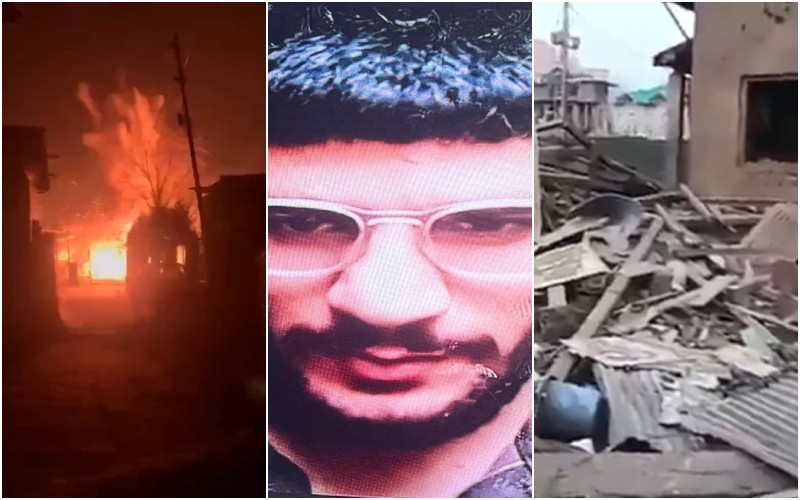
The house was destroyed using an improvised explosive device (IED) during the intervening night of Thursday and Friday as part of the ongoing investigation into the terror attack.
Officials have tied the Hyundai i20 car used in Monday’s explosion — which killed 13 people and injured more than 20 — to Dr Umar-un-Nabi, a Kashmir-based doctor believed to have been behind the wheel. His precise role in the bombing remains under probe.
Six arrested as police launch statewide raids
Following the blast, Jammu and Kashmir Police carried out overnight raids across multiple locations, arresting six individuals, including three members of Dr Umar’s family.
Investigators revealed that Umar had been in contact with two other Kashmiri doctors, previously detained in connection with the Faridabad terror module, where authorities seized 2,900 kg of explosives.
Umar’s identity was confirmed after DNA recovered from the blast site matched samples taken from his mother.
From promising doctor to radicalised operative
According to officials, Umar had once been considered a bright and dedicated medical professional in his community.
However, over the past two years, he allegedly gravitated toward extreme ideology.
Investigators found that Umar had joined several radical messaging groups on encrypted platforms.
Along with Dr Muzammil Ahmad Ganaie and Dr Shaheen Shahid, Umar reportedly used the Switzerland-based encrypted app Threema to plan and coordinate their activities.
Police also discovered that Umar had created a small, tightly controlled Signal group to oversee specific parts of the operation.
Funding trail and explosive materials
Probing agencies found that the group had pooled more than Rs 26 lakh in cash, which was handed over to Umar to finance the conspiracy.
A substantial portion of the funds was used to purchase around 26 quintals of NPK fertiliser — worth about Rs 3 lakh — from suppliers in Gurugram, Nuh, and surrounding areas.
When combined with other chemicals, NPK serves as a crucial ingredient for improvised explosive devices.
Sources said the terror cell had allegedly planned coordinated explosions across four cities, with eight suspects preparing to split into pairs to execute simultaneous attacks.