
In a post on X, Luxon said the agreement would reduce or eliminate tariffs on 95 per cent of New Zealand’s exports to India.
“Based on New Zealand’s growth in trade following other FTAs, the potential gain for our exporters and our economy from this agreement is huge,” he said.
One of the most important parts of my job is getting out and hustling for New Zealand on the world stage.
— Christopher Luxon (@chrisluxonmp) December 22, 2025
We’ve just concluded an excellent Free Trade Agreement with India - and it’s a credit to the hard work and persistence of Todd ‘Trade’ McClay @toddmcclaymp and our…
Luxon noted that trade already supports one in four jobs in New Zealand, adding that the FTA would further strengthen the economy by supporting farmers, growers, manufacturers and exporters.
“This agreement backs our businesses to compete on the world stage,” he said. “When we trade with the world, we grow our economy at home — creating more jobs, attracting investment and lifting wages for Kiwis.”
Modi–Luxon conversation
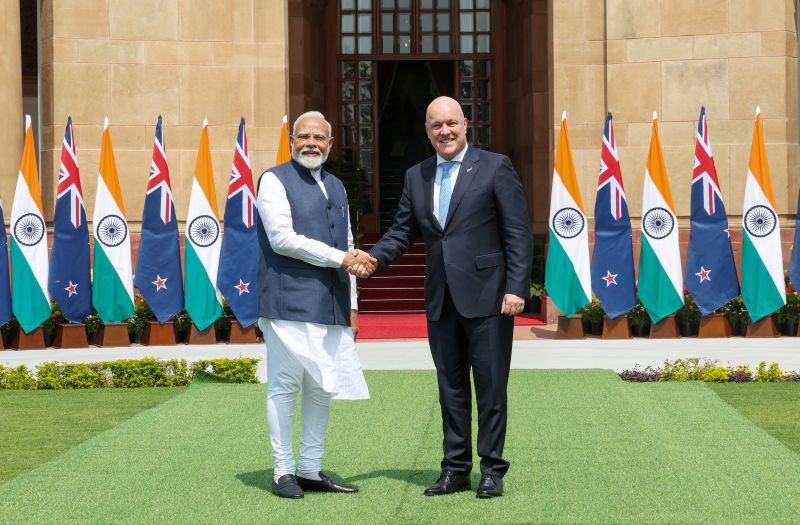
Earlier in the day, Prime Minister Narendra Modi held a telephone conversation with Luxon, during which the two leaders jointly announced the conclusion of the India–New Zealand FTA.
In a statement, the Prime Minister’s Office (PMO) said negotiations for the agreement were initiated during Luxon’s visit to India in March 2025 and were concluded in a record nine months.
“The conclusion of the FTA reflects the shared ambition and strong political will of both countries to further deepen bilateral ties,” the statement said.
According to the PMO, the agreement is expected to significantly enhance economic engagement between India and New Zealand by improving market access, boosting investment flows, strengthening strategic cooperation, and creating new opportunities for innovators, entrepreneurs, farmers, MSMEs, students and youth in both countries.
With the robust foundation provided by the FTA, both leaders expressed confidence in doubling bilateral trade within the next five years, along with attracting USD 20 billion in New Zealand investment into India over the next 15 years.