
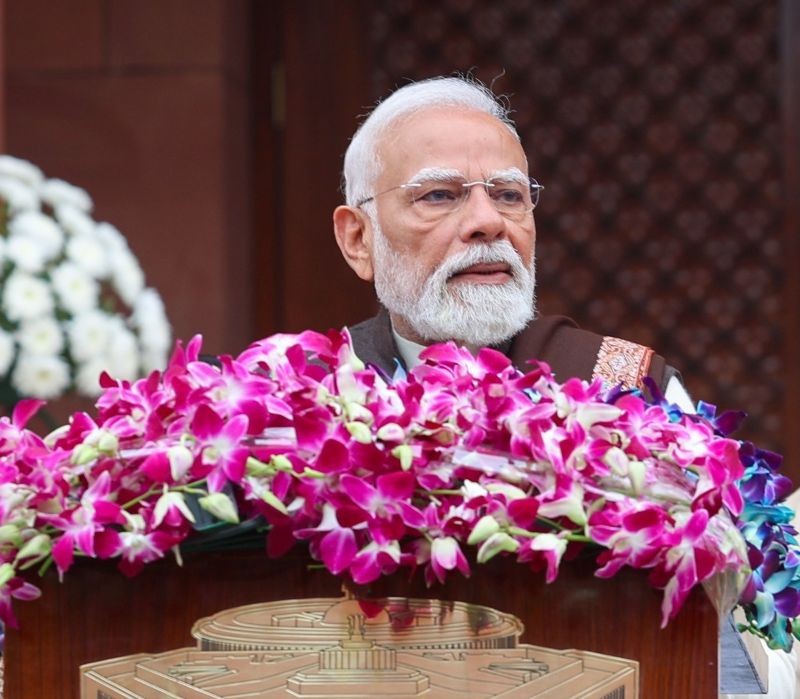
“This Budget is the foundation for our journey towards a Viksit Bharat by 2047,” Modi said, adding that it would give India’s “Reform Express new energy and fresh momentum.”
The Union Budget reflects the aspirations of 140 crore Indians. It strengthens the reform journey and charts a clear roadmap for Viksit Bharat.#ViksitBharatBudget https://t.co/26hIdizan9
— Narendra Modi (@narendramodi) February 1, 2026
Describing the proposals as ambitious, the Prime Minister said the Budget charts a comprehensive roadmap to accelerate the Make in India and Aatmanirbhar Bharat initiatives.
He added that the measures announced would help nurture leaders, innovators and creators across sectors, fostering entrepreneurship and long-term competitiveness.
India’s Union Budget for 2026–27 places a renewed emphasis on manufacturing, infrastructure and technology-led growth, as Finance Minister Nirmala Sitharaman seeks to sustain economic momentum amid global uncertainty and tighter financial conditions.
Presenting the Budget in Parliament, Sitharaman said the government’s priorities for Asia’s third-largest economy would focus on accelerating growth, enhancing competitiveness and strengthening resilience against volatile global dynamics.
The Budget outlines steps to deepen financial sector reforms, scale up capital expenditure and review regulatory frameworks to support sustained expansion.
The fiscal roadmap projects gradual consolidation. The debt-to-GDP ratio is estimated at 55.6 per cent in 2026–27, down from 56.1 per cent in the revised estimates for the current year, while the fiscal deficit is pegged at 4.3 per cent of GDP.
For 2026–27, the government has projected non-debt receipts at ₹36.5 lakh crore and total expenditure at ₹53.5 lakh crore. Net tax receipts are estimated at ₹28.7 lakh crore. Gross market borrowings are budgeted at ₹17.2 lakh crore, with net borrowings from dated securities placed at ₹11.7 lakh crore.
Capital expenditure in the revised estimates for 2025–26 stands at around ₹11 lakh crore, underscoring the continued thrust on asset creation and infrastructure development.