
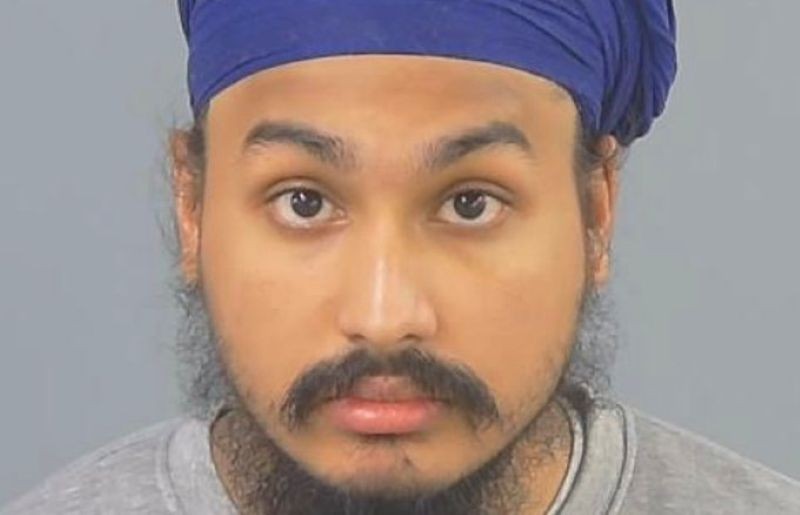
The court heard that Nowak was walking home after spending an evening with friends when he was fatally stabbed with a 21 cm blade during an altercation.
Attack and false claim of racist assault
Following the stabbing, Digwa reportedly told police that he had been the victim of a racist attack and claimed his turban had been knocked off during the incident.
However, the court rejected this account and found that he had falsely attempted to portray himself as the victim.
Court says victim made no racist remarks
Judge William Mousley, presiding at Southampton Crown Court, said he was satisfied that Nowak had not made any racist comments prior to the attack.
The court heard that the victim had asked Digwa whether he was a “bad man,” which the judge said triggered the confrontation.
Weapon described as belt-carried blade
The judge said Digwa used a large knife he carried attached to his belt. During sentencing, the court criticised the misuse of what was described in proceedings as a kirpan-like blade.
The judge said religious symbolism should not be associated with violent conduct, adding that the offence had caused wider concern and anxiety in the community.
Debate over Kirpan description
The case sparked debate over how the weapon was described in court, with the Sikh Federation UK stating that authorities should have clarified that the blade used was not a ceremonial kirpan.
Prosecutors later clarified that they did not describe the weapon as a kirpan in their official case presentation.
Police conduct during incident questioned
Bodycam footage reviewed in court showed officers restraining and handcuffing the victim while he was still critically injured. He repeatedly told officers he had been stabbed before losing consciousness.
The victim’s family described the police response as “inhuman and degrading,” alleging that officers failed to recognise the severity of his condition in time.
Family statements and community response
Nowak’s father, Mark Nowak, said his son was repeatedly told to comply with arrest procedures despite stating he could not breathe and that he was dying.
Meanwhile, Digwa’s family issued an apology to the victim’s family, expressing regret and saying the incident had brought disrepute to the Sikh community.
The jury convicted Digwa of murder, and the court ordered him to serve a minimum of 21 years in prison before being eligible for parole.