
“I’m innocent. I am not guilty. I am a decent man, the president of my country,” Maduro told the judge during his first appearance in a U.S. courtroom.
Maduro, wearing a blue jail uniform, appeared alongside his wife for the brief procedural hearing, marking the formal start of what is expected to be a prolonged legal battle over whether he can be tried in the United States.
Both used headsets to follow the proceedings through Spanish translation.
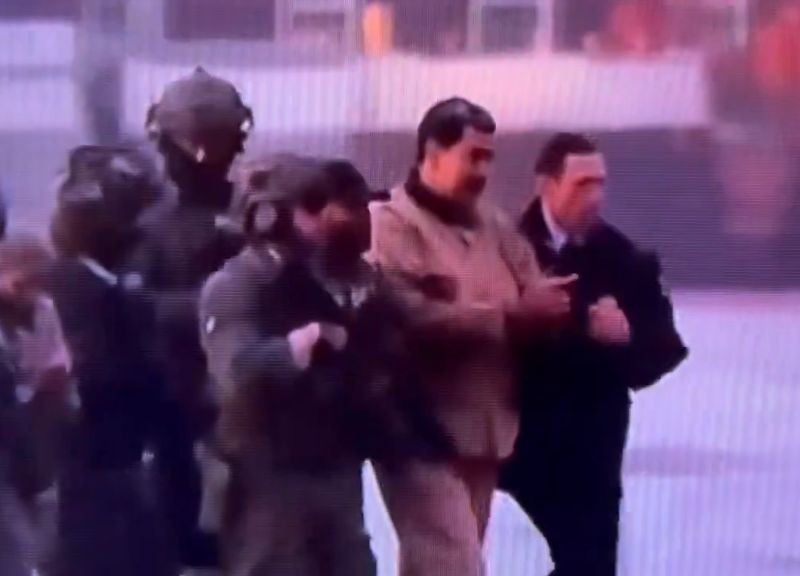
The former Venezuelan president was transported under heavy security from a Brooklyn detention facility early Monday morning.
🚨| El genocida Nicolás Maduro y Cilia Flores bajando del helicóptero desde donde fueron trasladados como los narcoterroristas que son, esposados y con uniforme de presos, para ir al tribunal a su primera audiencia. Este es un día histórico y de gloria para los venezolanos. 🇻🇪 pic.twitter.com/mEcAGxEuIl
— Eduardo Menoni (@eduardomenoni) January 5, 2026
He was taken by motorcade to a nearby field, flown by helicopter across New York Harbor, and then driven in an armored vehicle to a Manhattan courthouse.
Outside the courthouse, police kept protesters opposed to the U.S. operation separate from a small group of pro-intervention demonstrators, as tensions flared briefly during the hearing.
Maduro faces narco-terrorism and drug trafficking charges that the Trump administration cited as justification for his capture in Caracas and transfer to New York.
As a criminal defendant, Maduro is entitled to the same legal rights as any accused person in the U.S. justice system, including a jury trial.
His lawyers are expected to challenge the legality of his arrest, arguing that he enjoys immunity as a sovereign head of state. However, U.S. authorities do not recognize Maduro as Venezuela’s legitimate leader following his disputed 2024 re-election.
The case has drawn comparisons to the 1990 capture of Panamanian leader Manuel Noriega, whose similar immunity claims were ultimately rejected by U.S. courts.