
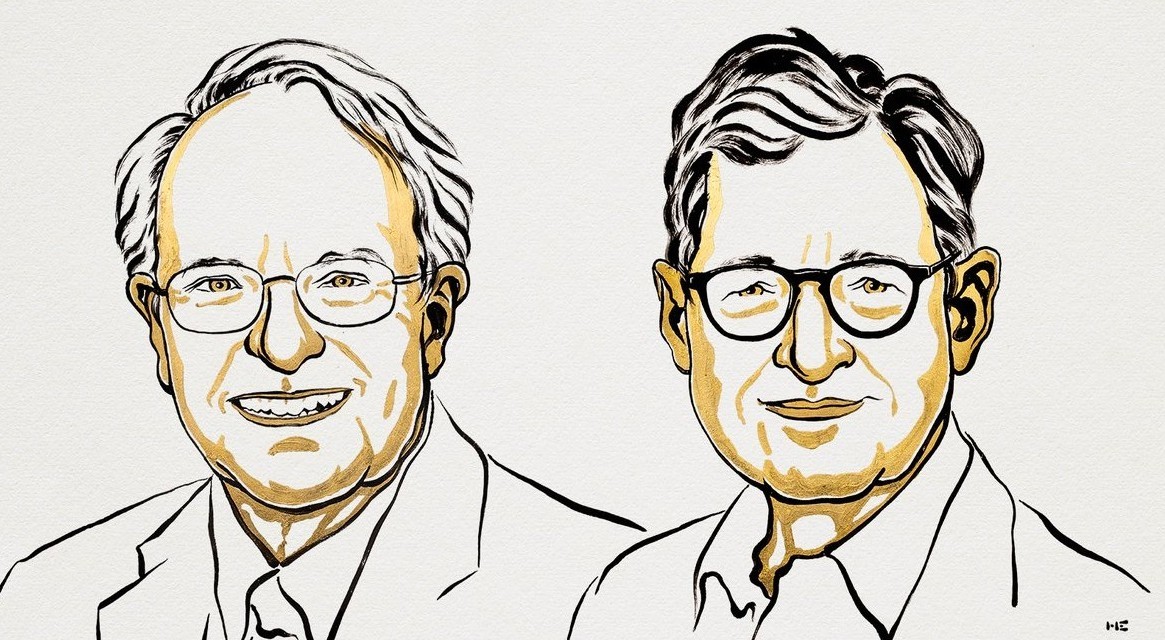
This was the final Nobel Prize to be announced this year.
Explaining the economists’ contributions, the Nobel Prize organisation said, “The economy is characterised by alternating downturns and upturns. Ever since the economist John Maynard Keynes launched his theories almost a century ago, stabilisation policy has been important for tackling these fluctuations.”
During recessions, governments and central banks typically seek to stimulate economic activity by cutting interest rates and increasing budget deficits. Conversely, they may raise interest rates and tighten fiscal policy to cool an overheating economy.
However, during the oil crises of the 1970s, the Keynesian models used to determine when and how such measures should be implemented appeared to lose their effectiveness.
Instead of reducing unemployment, the policies contributed to rising inflation. Western economies experienced a decade marked by sluggish growth, high unemployment and high inflation. This led many to question whether stabilisation policies were doing more harm than good and whether they should be abandoned.
2026 economic sciences laureate Michael Woodford’s economic model has made it possible to respond to supply shocks more effectively. Various types of shocks can disrupt the balance between supply and demand. A negative supply shock could be a commodity shortage, while a positive supply shock could be a technological breakthrough that makes the production of large volumes cheaper and easier. A positive demand shock could be good news about the future that increases households’ consumption, and a negative one the opposite news. If the balance is disrupted, it can be reset using a stabilisation policy that reduces demand (to the left) or increases it (to the right). #NobelPrize
— The Nobel Prize (@NobelPrize) October 12, 2026
Hall and Woodford have been recognised for demonstrating how economic models could be rebuilt to strengthen stabilisation policy. Rather than relying solely on statistical relationships between macroeconomic variables such as inflation, output and consumption, they developed approaches grounded in microeconomic principles.
These principles seek to explain how the decisions and actions of individual households and businesses collectively shape the wider economy.
A central feature of these models is the assumption that households and businesses are forward-looking when making decisions about savings, spending and prices. By communicating their economic policy plans, governments and central banks can influence expectations about the future and help steer the economy in the desired direction.
Since their introduction, these models have proved valuable in understanding and responding to economic downturns.
“The laureates’ work has provided us with a stable theoretical foundation for the models that are now used by central banks and governments around the world. With them, we are better equipped to deal with shocks in the economy, such as energy crises or sudden changes in how much households consume,” said John Hassler, chair of the Committee for the Prize in Economic Sciences.