
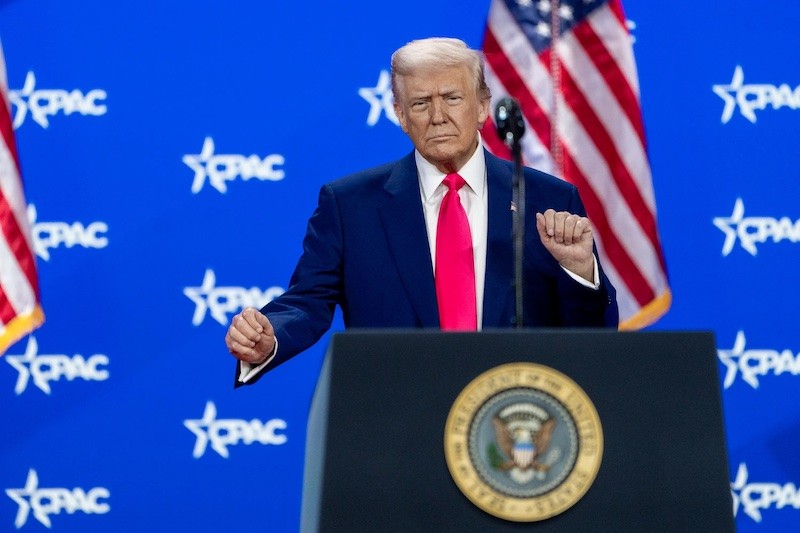
However, the court carved out an important exception for the Federal Reserve, allowing Governor Lisa Cook to remain in office while her lawsuit challenging Trump's attempt to fire her proceeds.
Court overturns 91-year-old precedent
In a 6-3 ruling, the court overturned its 1935 decision in Humphrey's Executor, which had limited a president's ability to dismiss members of independent regulatory agencies except for specific reasons outlined in federal law.
Writing for the majority, Chief Justice John Roberts said protections preventing presidents from removing agency officials without cause violated the Constitution's separation of powers.
"We hold that such protection from removal is contrary to the separation of powers enshrined in the Constitution," Roberts wrote.
The ruling came in the case of former Federal Trade Commission (FTC) commissioner Rebecca Slaughter, who was dismissed by Trump despite a federal law requiring cause for her removal.
Decision extends beyond the FTC
The judgment is expected to affect several other independent agencies, including the National Labor Relations Board (NLRB), the Merit Systems Protection Board and the Consumer Product Safety Commission, where Trump has also removed board members.
The decision effectively gives future presidents broader authority to reshape independent agencies by replacing officials appointed by previous administrations.
Trump welcomed the ruling in a post on Truth Social, calling it "one of the most important ever given with respect to Presidential Powers."
Federal Reserve gets an exception
While broadening presidential powers, the court stopped short of allowing Trump to immediately remove Federal Reserve Governor Lisa Cook.
In a narrow 5-4 decision, the justices ruled that Cook could remain on the Fed's Board of Governors while her legal challenge continues.
Chief Justice Roberts joined Justices Brett Kavanaugh and the court's three liberal members in the majority.
Roberts wrote that removing Cook before judicial review would effectively eliminate the legal protections intended for Federal Reserve governors.
Cook, who was nominated by former President Joe Biden, has denied allegations that she committed mortgage fraud by claiming two homes as primary residences before joining the Federal Reserve. She has not been charged with any crime.
Cook says case is politically motivated
Responding to the ruling, Cook said the case was never about mortgage paperwork but about protecting the independence of the central bank.
She alleged the effort to remove her was based on a "manufactured pretext" because she refused to allow political considerations to influence interest rate decisions.
Critics of Trump's move argue that replacing Cook would allow him to appoint another governor aligned with his views, potentially giving him greater influence over US monetary policy.
Liberal Justices warn of growing executive power
Justice Sonia Sotomayor, reading a summary of her dissent from the bench, warned that the ruling fundamentally shifts the balance of power in favour of the presidency.
"The president, to be sure, emerges with more power than ever before," she said, adding that the authority was granted "by six justices on this court, not the people or the Constitution."
The ruling marks one of the most consequential decisions on presidential authority in recent years and is expected to reshape the relationship between the White House and independent federal agencies for years to come.