
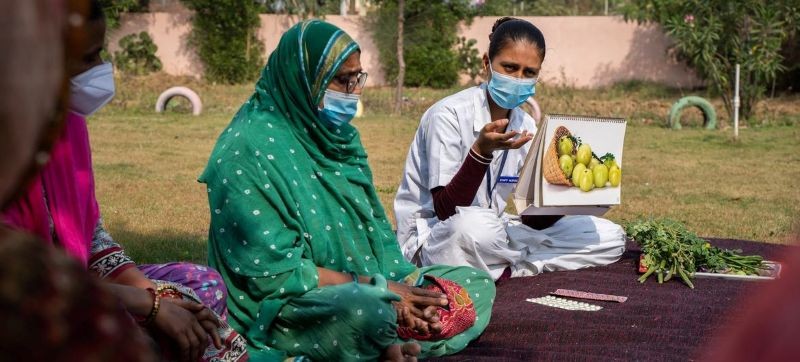
The warning, issued jointly by UN agencies and the regional socio-economic bloc SAARC on Wednesday, underscores South Asia’s status as the “global epicentre” of anaemia among adolescent girls and women.
An estimated 259 million already suffer from the condition, which impairs the body’s ability to carry oxygen, contributing to chronic fatigue, poor maternal outcomes, and reduced educational and economic participation.
“This is a clarion call for action,” said Sanjay Wijesekera, Regional Director for the UN Children’s Fund (UNICEF), which together with the UN World Health Organization (WHO) and SAARC prepared the analysis.
“When half of all adolescent girls and women in South Asia are anaemic, it is not only a health issue – it is a signal that systems are failing them.”
A far-reaching but preventable condition
Anaemia doesn’t just affect women and girls – it contributes to 40% of the world’s low birth weight cases and affects child growth and learning, particularly in poorer households.
The economic toll is staggering: anaemia costs South Asia an estimated $32.5 billion annually, perpetuating cycles of poverty and poor health.
Yet, the condition is preventable and treatable. Proven solutions include iron and folic acid supplementation, iron- and vitamin-rich diets, better sanitation and infection control, and stronger maternal health services.
Experts stress that multi-sector collaboration is critical for sustained progress.
Integrated efforts crucial
In nearly every country, progress hinges on strengthening health systems, expanding nutrition programmes, and reaching adolescent girls and women in marginalised communities.
Sri Lanka, where 18.5 per cent of women of reproductive age are anaemic, is scaling up its national nutrition initiative, focusing on the most affected districts.
India and Pakistan are also seeing encouraging signs. In India, high-burden states are integrating iron supplementation into school and maternal care programmes. Pakistan has piloted community-based nutrition initiatives linked to reproductive health services, enabling early detection and follow-up care.
In Bangladesh, school-based health initiatives are reaching adolescents with fortified meals and health education, coordinated across health, education, and agriculture ministries.
Community-driven action works
The Maldives and Bhutan are prioritising early prevention through childhood nutrition, food fortification, and public awareness campaigns. Though smaller in population, both are investing in anaemia surveillance and inter-ministerial collaboration.
Nepal stands out for its equitable results: since 2016, the country has cut anaemia among women of reproductive age by 7 per cent, with larger declines in poorer areas. Its female community health volunteers are key, providing counselling and referrals in remote regions and linking vulnerable households to public services.
Man Kumari Gurung, a public health nurse in Karnali Province, credits the achievements to a range of community-driven efforts.
“Pregnant women receive eggs, chicken and nutritious food through programmes like Sutkeri Poshan Koseli (Nutrition Gift for New Mothers),” she said. “Cash grants also help with transport to hospitals, supporting safer births and better nutrition.”
Everyone has a role
Ending anaemia requires leadership and teamwork. Governments must lead, but communities, health workers, schools, and families all play a part.
Stronger health systems, better data, and coordinated action across sectors can help girls and women reach their full potential – building healthier communities and stronger economies.
“Young people and mothers are at the heart of South Asia’s development goals. Ensuring that they are healthy, nourished and empowered is not just a moral imperative, it is a strategic investment in the future of our societies,” said Md. Golam Sarwar, Secretary General of SAARC.