
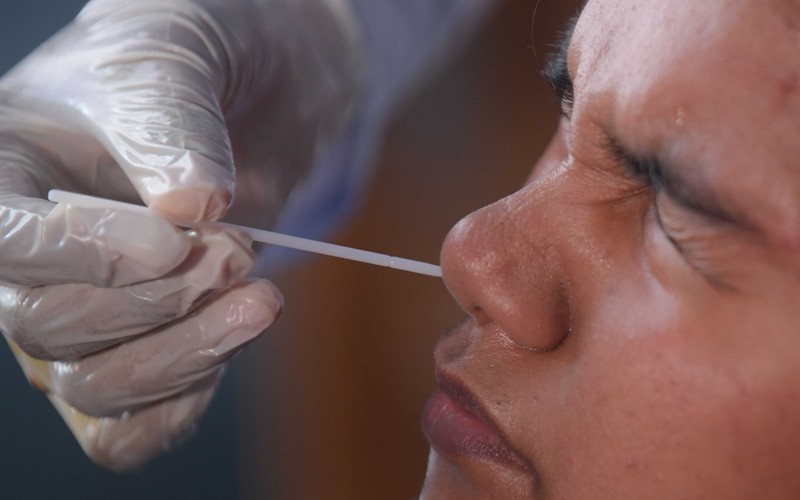
Officials say the current situation remains under control, with only 257 active cases nationwide and no sign yet of the newer Omicron subvariants seen abroad.
According to health officials quoted by PTI, states like Kerala, Maharashtra and Tamil Nadu have reported fresh cases in recent days—Kerala logging 69, Maharashtra 44, and Tamil Nadu 34. Maharashtra currently has 56 active infections.
Two COVID-positive deaths—a 14-year-old girl and a 54-year-old woman—were reported from Mumbai’s KEM Hospital, but authorities clarified that both had serious underlying conditions.
"These deaths were not due to COVID-19," the Brihanmumbai Municipal Corporation (BMC) said, citing causes such as nephrotic syndrome with hypocalcemic seizures and cancer.
A high-level review meeting chaired by the Director General of Health Services (DGHS) was held on May 19 with officials from the NCDC, ICMR and other central bodies.
"The current COVID-19 situation in India remains under control. Almost all of the 257 cases are mild, with no hospitalisation required," an official told PTI after the meeting.
Despite the low case count, the Union Health Ministry has asked hospitals to keep a close watch on cases of influenza-like illness (ILI) and severe acute respiratory infections (SARI).
The government continues to rely on robust systems like the Integrated Disease Surveillance Programme (IDSP) and ICMR’s virus monitoring networks for early warning.
Globally, Singapore has seen cases rise to over 14,000 in early May from around 11,100 in late April.
China and Thailand are also witnessing noticeable increases, related to Omicron subvariants JN.1, LF.7, and NB.1.8—descendants of the BA.2.86 lineage. While these variants are driving new waves elsewhere, Indian authorities have not confirmed their presence in the country so far.
Experts maintain that COVID-19 is now largely cyclical, with periodic increases expected every six to nine months.
Thanks to widespread immunity from vaccines and past infections, these waves are likely to be less severe than in the early years of the pandemic.