
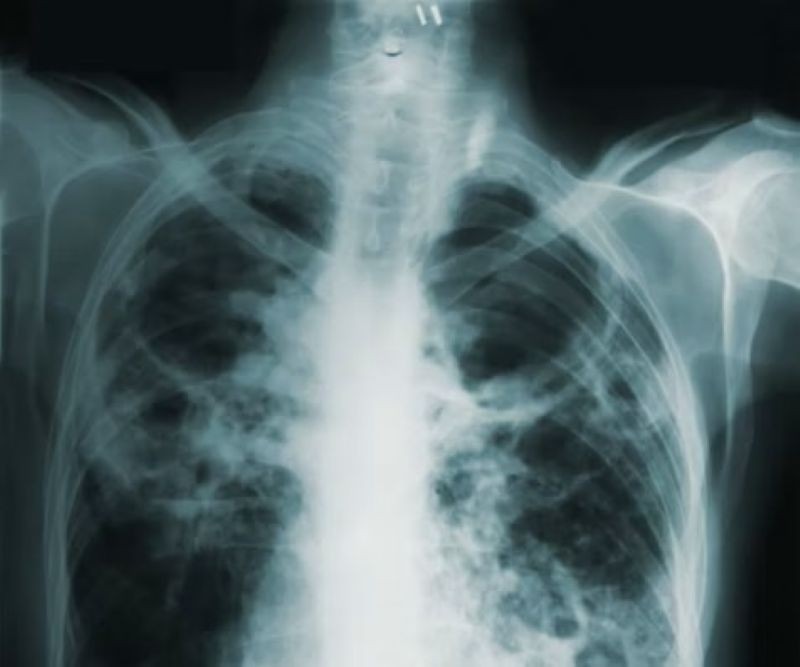
TB is caused by bacteria that most often affects the lungs. Every day, over 3,300 people die from the disease, with Southeast Asia accounting for nearly 40 per cent of deaths. Yet it is both preventable and treatable, including by using the antibiotic rifampicin.
WHO has issued new guidelines on testing, recommending that countries deploy innovations such as new near-point-of-care molecular diagnostic tests and tongue swabs, both of which can help with faster detection.
Fast and accurate diagnosis
The tests cost half the price of those currently available, operate on battery power and deliver results in less than an hour, meaning that treatment can begin sooner.
Tongue swabs allow adults and young people who cannot produce sputum to receive TB testing for the first time. Specimens can therefore be easily collected, thus enabling detection among people who are at an increased risk of dying from the disease.
“These new tools could be truly transformative for tuberculosis, by bringing fast, accurate diagnosis closer to people, saving lives, curbing transmission and reducing costs,” said WHO Director-General Tedros Adhanom Ghebreyesus.
Beyond TB, they also have the potential to test for other diseases such as HIV, mpox, and HPV (human papillomavirus).
The guidelines also recommend a sputum pooling strategy in which samples from several individuals are mixed and tested together – an approach that can improve testing efficiency and significantly reduce costs, particularly when resources are constrained.
Global health funding slashed
WHO noted that although global efforts to combat TB have saved roughly 83 million lives since the year 2000, funding cuts are putting these gains at risk.
Uptake of rapid diagnostic tools has been a challenge in many countries due to factors such as high costs and reliance on sample transport to support testing at centralized laboratories.
Although the new technologies represent a critical step forward, the UN agency said ending TB will require sustained investment in research and innovation at a time when global funding for research remains far below the estimated $5 billion needed annually.
We can end TB
The new guidelines were issued on World TB Day which is being celebrated under the theme “Yes! We can end TB.”
WHO urged governments to accelerate roll out of the new diagnostic tools, strengthen people-centred TB care and build resilient health systems.
They are also encouraged to tackle the social and economic drivers of the disease, and protect essential TB services amid global crises and funding constraints.
Every dollar spent combating TB generates up to $43 in health and economic returns, according to Dr. Tereza Kasaeva, Director of WHO’s Department for HIV, Tuberculosis, Hepatitis and Sexually Transmitted Infections.
“What is required now is decisive leadership, strategic investment and rapid implementation of WHO recommendations and innovations to save lives and protect communities,” she said.