
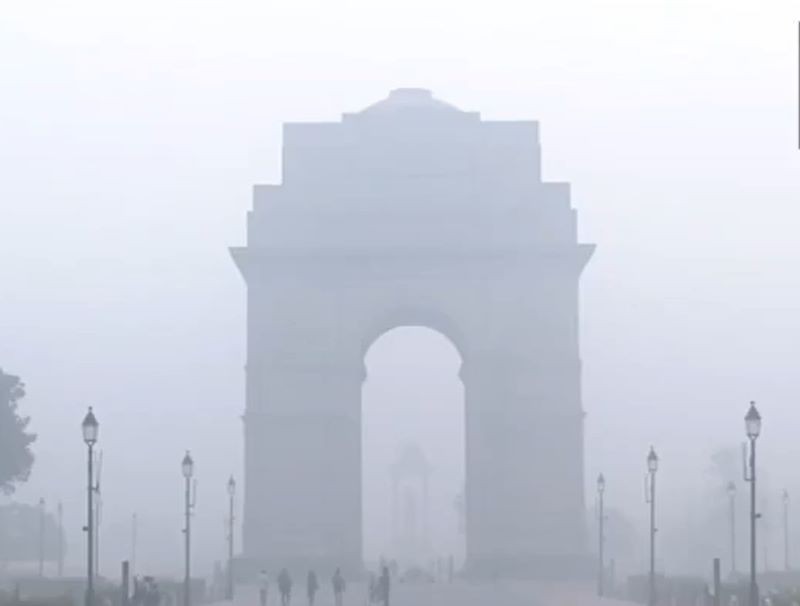
Curbs under GRAP-3 were revoked on Sunday and the measures under GRAP-4 were not imposed since December 24.
In its order, the Commission for Air Quality Management (CAQM) said the AQI in Delhi, which was at 275 on Tuesday, rose sharply to 386 on Wednesday due to dense fog and low temperatures leading to “extremely low mixing height and ventilation coefficient for dispersion of pollutants”.
It noted that the AQI had climbed to 396 at 6 pm and was likely to breach the 400 mark.
"Accordingly, in an effort to prevent further deterioration of the air quality and in pursuance of the Hon'ble Supreme Court's directives, the Sub Committee on GRAP hereby decides to straightway invoke ALL actions under Stage-III ('Severe' Air Quality of Delhi) & also Stage-IV ('Severe+' Air Quality of Delhi) of extant Schedule of GRAP, with immediate effect in right earnest by all the agencies concerned in Delhi-NCR, in addition to the Stage-I and II actions already in force," the CAQM said in its order.
The Supreme Court had earlier ordered that GRAP Stage 3 measures should be implemented if the AQI exceeds 350 and Stage 4 measures reintroduced if it crosses 400.
What does the GRAP 4 measure mean?
The government can stop the entry of truck traffic into Delhi and ban all construction and demolition activities for linear public projects such as highways, roads, flyovers, overbridges, power transmission, pipelines, telecommunication etc.
The government can discontinue physical classes.
It can also take a call on whether to allow public, municipal and private offices to work on 50% strength and the rest to work from home.
State governments may consider additional emergency measures like the closure of colleges/educational institutions and closure of non-emergency commercial activities, permitting the running of vehicles on the odd-even basis of registration numbers etc.
Children, the elderly, and those with respiratory, cardiovascular, cerebrovascular, or other chronic diseases to avoid outdoor activities and stay indoors.