
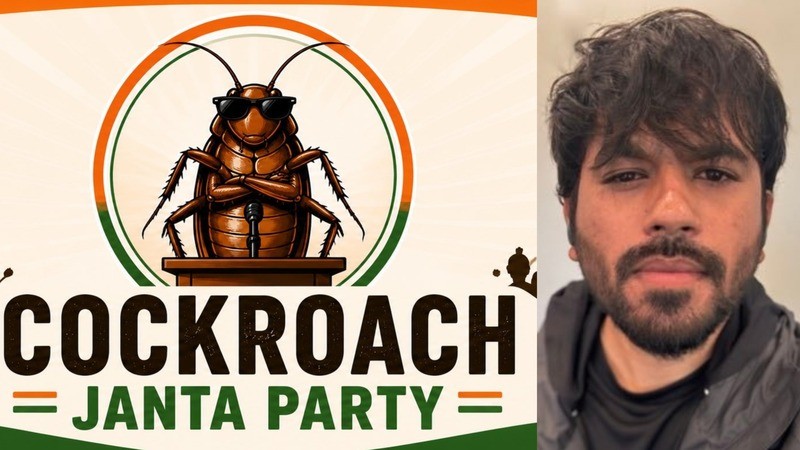
Earlier this month, Dipke had urged supporters to assemble at the airport and accompany him to the Parliament Street Police Station, where he plans to seek permission for a proposed protest at Jantar Mantar.
However Dipke on Thursday shared a video message asking supporters to avoid gathering at the airport.
"We did not expect such an overwhelming response and thus we don't want to cause any kind of inconvenience to the security forces at the airport," Dipke said.
Dipke, who is scheduled to arrive in Delhi on June 6, said he would proceed directly to the Parliament Street Police Station and requested supporters to join him there instead.
"We will seek permission directly for our peaceful protest at Jantar Mantar. We are law-abiding citizens and have to act responsibly. So please be mindful that nobody should create any kind of disturbance," he said.
According to the organisers, members of the group will visit the police station after Dipke's arrival to complete formalities and seek permission for the proposed protest.
The campaign has also received support from climate activist Sonam Wangchuk, lending greater visibility to the movement.
Wangchuk said he would join the June 6 protest "if nothing changes by 5th June."
"Any self-respecting Minister should resign if things go so wrong... Not to mention the effect on millions of young lives and in fact the future of India," Wangchuk said while criticising Pradhan over alleged examination paper leaks.
Rise of the CJP
The Cockroach Janta Party emerged as an online satirical campaign that uses humour and social media engagement to criticise governance and public policy issues.
The movement gained traction following a controversy surrounding remarks attributed to Chief Justice of India Surya Kant. Social media users alleged that the Chief Justice had referred to unemployed youth as "cockroaches", triggering widespread criticism.
However, the Chief Justice later clarified that his remarks had been "misquoted" and were not directed at unemployed youth. He said the comments were aimed at individuals allegedly entering professions using "fake and bogus degrees".
In a statement issued after the controversy, the Chief Justice said he was "pained" by media reports suggesting that he had criticised the country's youth.