
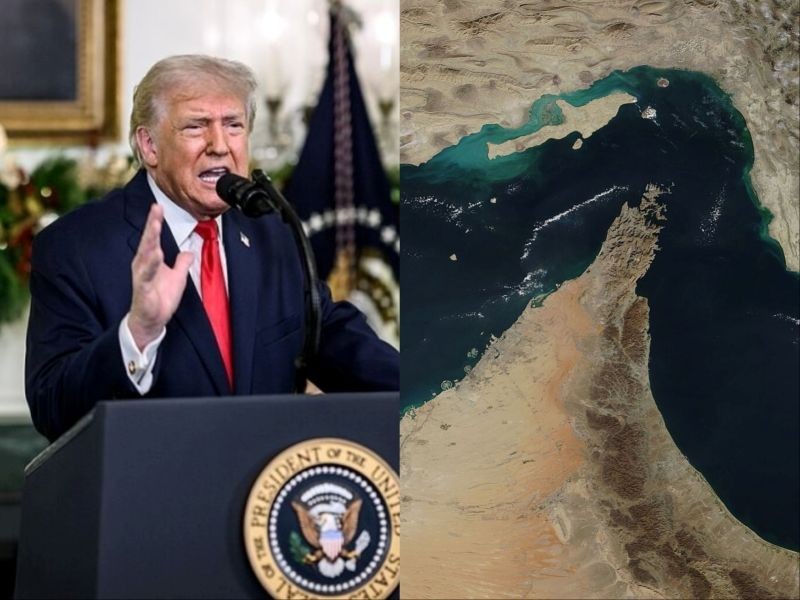
The remarks come just a day after both sides agreed to a two-week ceasefire, aimed at cooling escalating tensions in the region.
Responding to a question from ABC News journalist Jonathan Karl, Trump said the idea is being explored as a cooperative mechanism.
“We’re thinking of doing it as a joint venture. It’s a way of securing it… also securing it from lots of other people,” he said, calling the proposal “a beautiful thing.”
This morning, I asked President Trump if he’s okay with the Iranians charging a toll for all ships that go through the Strait of Hormuz, he told me there may be a Joint US-Iran venture to charge tolls:
— Jonathan Karl (@jonkarl) April 8, 2026
“We’re thinking of doing it as a joint venture. It’s a way of securing it —…
US may charge ships for passage
Trump had earlier indicated that the United States is actively considering charging vessels transiting the crucial waterway.
Any such move would likely require direct US military oversight in the strait, which connects the Persian Gulf to the Indian Ocean and lies largely within Iranian and Omani territorial waters.
Massive revenue potential
The Strait of Hormuz sees around 120 ship transits daily, according to shipping data.
Reports suggest Iran may already be charging up to $2 million per vessel
At similar rates, a US-led toll system could generate roughly $240 million per day
Trump Claims Strategic Victory
Reiterating his stance on the conflict, Trump declared the US had emerged victorious.
“We’re the winners. We won, OK? They are militarily defeated,” he said, downplaying Iran’s continued drone and missile activity in the region.
Plan raises legal and strategic questions
The proposal is likely to spark global debate, as the strait is one of the world’s most critical energy corridors.
Any attempt to impose tolls could:
- Challenge international maritime norms
- Escalate tensions with regional powers
- Impact global oil prices and shipping costs
- High-Stakes Idea in a Fragile Moment
Coming amid a fragile ceasefire, the proposal underscores how economic leverage and security strategy are becoming intertwined in the conflict—potentially reshaping control over one of the world’s most vital trade routes.